What Your Skin Barrier Really Is (In Simple Terms)
After 19 years as an esthetician, this is something I explain in my treatment room every week:
Your skin barrier is your skin’s protective jacket. It keeps the good things in (like moisture) and keeps the bad things out (like pollution, bacteria, and irritants).
When your barrier is healthy, your skin looks:
-
Smooth
-
Plump
-
Calm
-
Hydrated
When it’s damaged?
Your skin starts letting you know real fast.
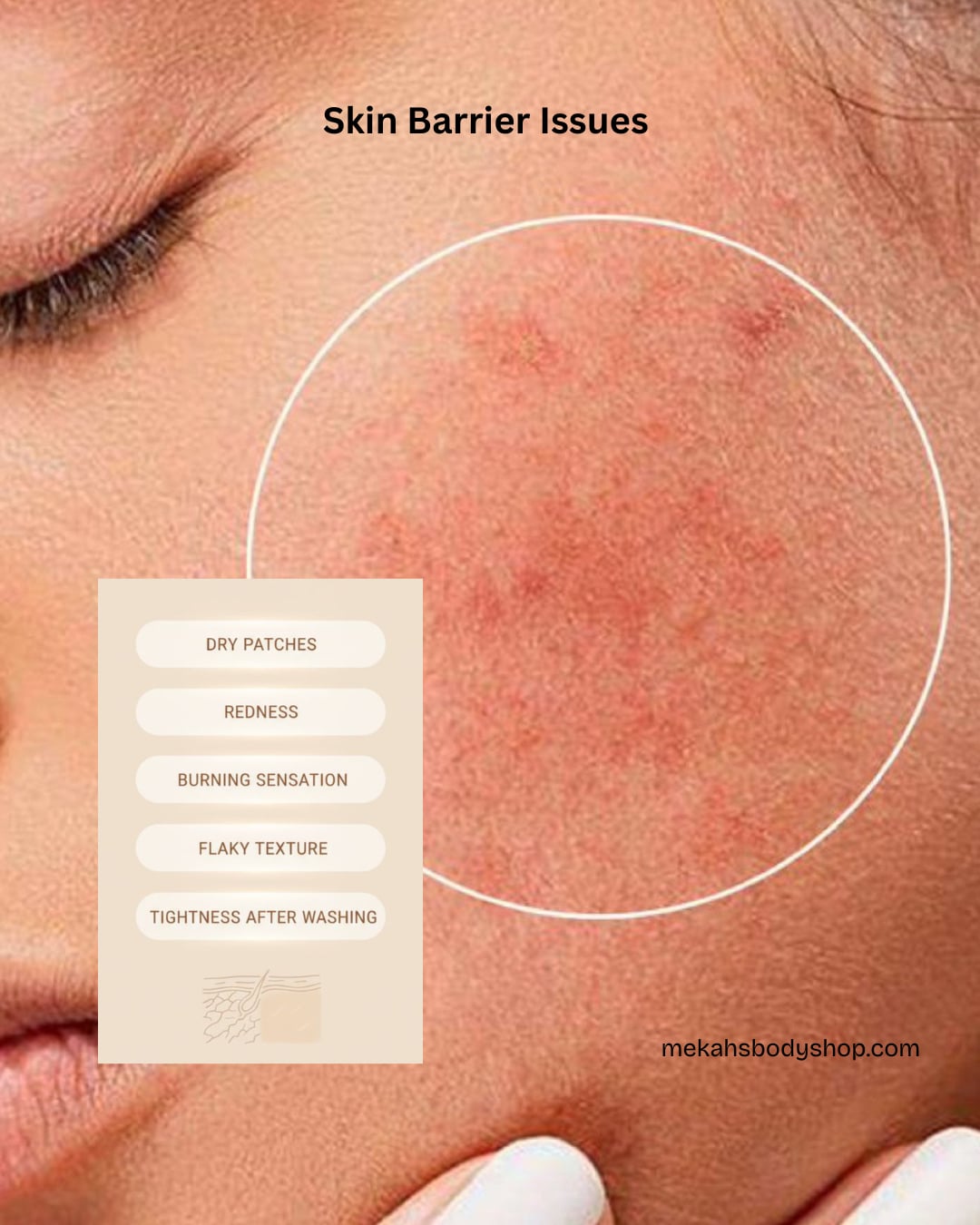
Signs Your Skin Barrier Is Damaged
If you’re noticing any of these, you’re not imagining it – your barrier is stressed:
-
Tightness or stinging
-
Flaky patches
-
Sudden redness
-
Breakouts that feel inflamed
-
Burning when you put on products that never used to burn
-
A “dry but oily” feeling
-
Texture you didn’t have before
Almost every guest who comes in telling me “my skin is freaking out” is dealing with some level of barrier disruption.
What Damages the Skin Barrier?
Here are the biggest everyday triggers I see in the treatment room:
1. Over-exfoliating
Scrubs, toners, acids, peeling solutions, retinoids – using too many at once leaves the barrier raw.
2. Washing too often or with harsh cleansers
Foaming cleansers and stripping washes pull away the lipids your barrier needs.
3. Weather changes
Cold, dry air or sudden heat shifts can leave the barrier dehydrated.
4. Strong actives without balance
Retinol, AHAs, BHAs, benzoyl peroxide – amazing when used correctly, stressful when layered incorrectly.
5. Stress and lack of sleep
Your barrier repairs itself at night. If you’re not resting, your skin isn’t either.
6. Waxing when the barrier is already compromised
If your skin is irritated, peeling, or dry, even the gentlest strip wax can feel more intense.
(I always check your barrier before I wax you and I’ll tell you honestly if we need to moisturize or pause before going in.)
How to Repair Your Skin Barrier (My Step-by-Step Method)
These are the same steps I guide my guests through during facial consultations and DM questions.
Step 1: Stop the irritation cycle
Take a break from:
-
Scrubs
-
AHAs & BHAs
-
Retinol
-
Benzoyl peroxide
-
Clay masks
-
Peels
Your barrier can’t heal if you keep peeling at it – even gently.
Step 2: Switch to a gentle cleanser
Look for words like:
-
Hydrating
-
Creamy
-
Moisturizing
-
Non-foaming
I keep several options in stock at the spa. Guests love hydrating cleansers because they remove the day without stripping the skin. A healthy barrier starts here.
Step 3: Add moisture back in
Your barrier is made up of lipids, ceramides, cholesterol, and fatty acids. If your barrier is compromised, you need products that help rebuild those components.
Great ingredients for this stage:
-
Ceramides
-
Hyaluronic acid
-
Squalane
-
Peptides
-
Fatty acids
-
Niacinamide
-
Panthenol
-
Urea
-
Oat extract
Barrier-repair moisturizers are some of my best sellers because they calm irritation quickly and help the skin hold moisture again.
Step 4: Seal it in with an oil
If your skin is dry, flaky, or tight, adding a nourishing oil at night helps trap moisture and lock in hydration.
If you’re oily, this step may not be necessary – and that’s where an in-person facial helps me guide you correctly.
Step 5: SPF every single day
When the barrier is damaged, UV exposure makes everything worse.
Simplest rule: If it’s daytime, SPF goes on.
Step 6: Keep your routine simple for 2–6 weeks
Barrier repair takes patience.
Minimal routines tend to work the fastest.
A sample reset routine for a damaged barrier might look like this:
AM
-
Gentle cleanser
-
Hydrating serum
-
Moisturizer
-
SPF
PM
-
Gentle cleanser
-
Hydrating serum
-
Barrier-repair cream
-
(Optional) Oil
From there, we can slowly reintroduce retinol or acids depending on your skin goals.
Products I Recommend (and carry at MBS)
I never push products just to sell them – but the right products matter so much when you’re repairing the barrier.
Here’s what I typically suggest at Mekah’s Body Shop Spa:
Hydrating Cleansers
Great for removing dirt without stripping the skin.
(Available in the spa.)
Ceramide Moisturizers
Strengthen the skin while calming irritation.
Hyaluronic Acid Serums
Pull moisture into the skin (must be followed with moisturizer).
Niacinamide Serums
Help even tone, improve texture, and soothe redness.
Squalane or Barrier Oils
Especially for dry, flaky, or reactive skin.
Post-Wax Calming Products
Aloe, azulene, and soothing creams help calm the skin after waxing – especially if the barrier needs extra love.
If you ever want personalized product suggestions, I’m always happy to recommend a full routine based on your skin goals.
When a Professional Facial Helps More Than At-Home Products
Sometimes your skin just needs professional hands.
That’s when a facial makes the biggest difference.
During a facial, I can:
-
Assess the barrier up close
-
Hydrate the deeper layers
-
Calm inflammation
-
Support healing without overwhelming your skin
-
Choose the right products for your exact skin type
If your skin feels sensitive, reactive, or confused, this is honestly the best time to book.
You can explore my facial options here:
👉 Facials at Mekah’s Body Shop Spa
👉 Skincare Services
👉 Chemical Peels
👉 Facial Add-Ons
If your barrier is compromised, I’ll keep your treatment gentle, hydrating, and restorative.
How Waxing Fits Into All This
Waxing requires a healthy barrier.
When your skin is dry or irritated, waxing can feel:
-
Hotter
-
More sensitive
-
More likely to lift
That’s why I always check your skin before I wax – and why I’ll sometimes recommend adding a soothing treatment or hydrating facial before your next wax.
A healthy barrier = a better waxing experience.
My Final Thoughts as Your Esthetician
Your skin barrier is the foundation of everything – texture, glow, moisture, clarity, comfort.
If your barrier isn’t happy, your skin won’t be either.
But the good news? It’s fixable. Always.
If your skin is feeling dry, irritated, or confused, I’m here to help you figure out exactly what’s going on.
And if you’re ready to get your barrier back on track, you can always book with me anytime – I’ve got you!