Let’s Talk About Brows! Hard Wax or Strip Wax? Here’s Why I Choose Hard Wax Every Time
After more than 19 years as a licensed esthetician, I’ve learned that experience changes the way you work.
When I first became licensed in May 2007, strip wax was commonly used for eyebrow waxing. It was the industry standard in many spas, and I used it too. But as I gained experience, continued my education, and watched how skincare evolved, I began changing my approach.
Today, while I still use strip wax on many areas of the body, I exclusively use hard wax for eyebrow waxing.
Why?
Because the skin around your eyes deserves extra care.
Over the past two decades, I’ve also seen another major shift. Today’s guests are far more likely to use prescription skincare, retinoids, exfoliating acids, and professional treatments than ever before. Those products can leave the skin more fragile and increase the risk of irritation or even skin lifting during waxing.
My goal isn’t simply to remove unwanted hair.
My goal is to protect your skin while creating beautiful, balanced brows you’ll love.
Let’s talk about why that matters.
Why the Skin Around Your Eyes Is Different
Many people are surprised to learn that the eyelids have the thinnest skin on the human body, measuring only about 0.5 millimeters thick.
Even though eyebrow waxing isn’t performed directly on the eyelid, the skin surrounding the eyes is still much thinner and more delicate than skin on the legs, arms, or even most areas of the face.
This area also has:
- Less collagen
- Fewer sebaceous (oil) glands
- Less natural cushioning
- Greater susceptibility to irritation
- Increased sensitivity to friction and trauma
That means even a small amount of unnecessary pulling can cause redness, irritation, or in certain situations, skin lifting.
As estheticians, we can’t change your anatomy.
What we can do is choose techniques that respect it.
Why I Prefer Hard Wax for Brows
Both hard wax and strip wax have their place in professional waxing.
I still use strip wax on appropriate areas of the body because it’s efficient and works beautifully when used correctly.
But eyebrows are different.
After nearly two decades of waxing thousands of guests, I believe hard wax offers several advantages for this delicate area.
1. Hard Wax Adheres Primarily to Hair
One of the biggest differences between hard wax and strip wax is how each interacts with the skin.
Strip wax is applied in a thin layer and removed with a cloth or paper strip. Because it adheres more firmly to both the hair and the surface of the skin, it can create greater mechanical stress during removal.
Hard wax works differently.
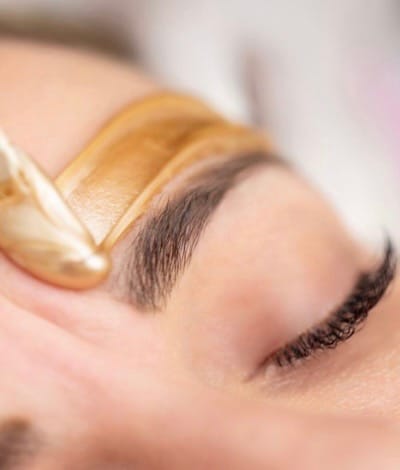
As it cools, it shrink-wraps around the hair shaft. While it still contacts the skin, its primary grip is on the hair itself, allowing for a gentler removal when applied correctly.
For delicate eyebrow skin, that’s a significant advantage.
2. Less Pulling on Delicate Skin
Eyebrow skin doesn’t have the same resilience as skin on the legs or back.
Every unnecessary pull places stress on tissue that’s naturally thinner and more fragile.
Hard wax helps minimize that stress while still removing coarse and fine hairs effectively.
For me, that’s an easy choice.
3. Better Comfort for Guests
One comment I hear repeatedly is:
“That wasn’t nearly as bad as I expected.”
While everyone’s pain tolerance is different, many guests find hard wax more comfortable for eyebrow services because there’s generally less repeated pulling on the skin.
4. Greater Precision
Brows frame the face.
Removing even a few extra hairs can completely change someone’s appearance.
Hard wax allows me to work with precision, creating clean lines while maintaining the natural balance of your brows.
As I often tell my guests:
Brows don’t grow back overnight. I’d rather remove a little less and have you love your shape than over-wax.
That’s a philosophy I’ve developed through years of experience, and it’s one I don’t compromise on.
Today’s Skincare Has Changed Everything
One of the biggest reasons I’ve changed my approach isn’t the wax itself.
It’s skincare.
Twenty years ago, relatively few guests arrived for brow appointments using prescription retinoids or daily exfoliating acids.
Today, it’s incredibly common.
Many people don’t realize these products can temporarily weaken the skin’s protective barrier.
That doesn’t mean you can never wax your brows.
It simply means your esthetician needs to know what you’re using before the service begins.
Medications That Can Increase the Risk of Skin Lifting
Always let your esthetician know about medications you’re taking.
Some medications can make the skin thinner, slower to heal, or more susceptible to injury.
Examples include:
- Isotretinoin (Accutane®)
- Tretinoin (Retin-A®)
- Adapalene (Differin®)
- Tazarotene
- Oral corticosteroids such as prednisone
- Long-term topical corticosteroids
- Certain chemotherapy medications
- Immunosuppressive medications
- Some antibiotics that increase photosensitivity, including doxycycline and minocycline
- Blood thinners, which can increase bruising even if they don’t directly increase the risk of skin lifting
This list isn’t meant to alarm you.
It’s meant to start a conversation.
The more I know about your skin, the better I can determine whether it’s appropriate to wax that day or recommend waiting.
Skincare Products That Can Make Skin More Fragile
Even over-the-counter products can affect your skin’s tolerance.
Products I ask about include:
- Retinol
- Retinal
- Prescription retinoids
- Glycolic acid
- Lactic acid
- Mandelic acid
- Salicylic acid
- Benzoyl peroxide
- High-strength Vitamin C serums
- Chemical exfoliants
- Enzyme exfoliants
- Facial scrubs
- At-home chemical peels
Professional treatments also matter.
Please tell me if you’ve recently had:
- Chemical peels
- Dermaplaning
- Microdermabrasion
- Microneedling
- Laser treatments
- IPL treatments
Sometimes the safest decision is simply waiting a little longer before waxing.
What Is Skin Lifting?
Skin lifting occurs when the outermost layers of skin separate during wax removal.
Although it’s uncommon, it can happen when the skin barrier has already been compromised.
Most cases aren’t caused by a single factor.
Instead, they usually involve several contributing elements, such as:
- Recent retinoid use
- Prescription medications
- Sunburn
- Recent exfoliation
- Incorrect waxing technique
- Multiple passes over the same area
- Improper skin support during removal
- Choosing the wrong type of wax for the area
This is exactly why a thorough consultation matters.
Every Brow Appointment Starts Before the Wax Is Applied
Before I ever pick up a waxing stick, I’m already evaluating your skin.
I may ask questions about:
- Your skincare routine
- Prescription medications
- Recent cosmetic treatments
- Laser procedures
- Chemical peels
- Sun exposure
- Previous waxing experiences
- Allergies
- Pregnancy or hormonal changes
These questions aren’t just conversation.
They’re part of keeping your skin safe.
Why Experience Matters
Products matter.
Technique matters.
Education matters.
Experience brings all of those together.
After waxing for more than 19 years, I’ve learned that beautiful brows aren’t created by removing the most hair.
They’re created by knowing when to stop.
Every face is different.
Every brow grows differently.
Every guest deserves an individualized approach.
Why I No Longer Use Strip Wax for Brows
This isn’t because strip wax is “bad.”
Far from it.
Strip wax remains an excellent option for many body areas when used correctly.
But for eyebrows, I’ve found that hard wax gives me the combination of precision, comfort, and gentleness I’m looking for.
It’s simply the better choice for how I practice today.
Sometimes experience means changing your mind.
That’s exactly what happened to me.
Brow Aftercare Matters Too
Taking care of your skin after waxing is just as important as preparing for your appointment.
For the first 24 to 48 hours, I recommend:
- Avoid touching the area unnecessarily.
- Skip exfoliating products.
- Pause retinoids and exfoliating acids as directed.
- Avoid excessive heat, including hot tubs and saunas.
- Wear sunscreen daily to protect freshly waxed skin.
- Let your skin recover before applying harsh active ingredients.
Healthy skin heals beautifully.
My Philosophy on Brows
I believe brows should complement your face… not compete with it.
Trends come and go.
Thin brows.
Thick brows.
Feathered brows.
Laminated brows.
Natural brows.
What never goes out of style is healthy skin and brows that suit you.
That’s why I take a conservative approach.
I’d rather remove a little less and keep your brows looking full and natural than over-wax and leave you waiting months for regrowth.
Your brows deserve patience.
Your skin deserves respect.
Final Thoughts
Eyebrow waxing isn’t just about removing hair.
It’s about understanding skin.
It’s about recognizing when someone shouldn’t be waxed that day.
It’s about choosing products thoughtfully.
And it’s about continuing to learn, even after nearly two decades in this profession.
For me, hard wax has become the clear choice for eyebrow waxing because it allows me to provide the gentle, precise approach I want every guest to experience.
If you’re unsure whether your skincare routine or medications could affect your next brow appointment, don’t guess.
Ask.
I’d much rather answer your questions beforehand than risk your skin.
Because beautiful brows should never come at the expense of healthy skin.
Frequently Asked Questions
Can I get my eyebrows waxed if I use retinol?
Possibly, but it depends on the type of retinoid, how often you use it, where you apply it, and the condition of your skin. Always tell your esthetician before your appointment.
Is hard wax less painful than strip wax?
Many guests find hard wax more comfortable for eyebrow waxing because it generally creates less pulling on the skin.
Can Accutane cause skin lifting during eyebrow waxing?
Yes. Isotretinoin can significantly increase skin fragility. Guests taking Accutane or who have recently completed treatment should discuss waxing with both their prescribing physician and esthetician.
Why do you ask so many questions before waxing?
Because your medications, skincare products, recent treatments, and overall skin health all influence whether it’s safe to wax. A consultation helps reduce unnecessary risks.
Is strip wax bad?
Not at all. Strip wax is an excellent professional product when used on appropriate areas. I simply believe hard wax is the better choice for eyebrow services.
Learn more about:
- The Difference Between Hard Wax and Strip Wax: Which Is Right for Your Skin?
- Your First Wax: Essential Pre-Wax Prep Tips for Silky Smooth Results
- Brow Waxing Services
- Everything You Need to Know About Female Waxing
- Everything You Need to Know About Male Waxing
- About Mekah
Ready for beautifully shaped brows? Whether it’s your first brow wax or you’re looking for a more thoughtful approach to eyebrow care, I’d love to help. Click Book Now to schedule your appointment at Mekah’s Body Shop and experience the difference that 19+ years of experience and a commitment to healthy skin can make.