The Hair Growth Cycle Waxing Guide: Why Consistent Waxing Gives You Smoother Skin
Have you ever wondered why I recommend scheduling your next wax before you even leave the spa?
Or why your first wax doesn’t remove every single hair… even when we do everything correctly?
These are some of the most common questions I hear from guests, and the answer almost always comes back to one thing:
Your hair growth cycle.
Understanding how your hair grows can completely change the way you think about waxing. It explains why consistent appointments produce better results, why shaving between waxes can slow your progress, and why guests who stick to a regular schedule often enjoy smoother skin with less noticeable regrowth.
After waxing guests for 19 years, I’ve seen firsthand how consistency transforms the waxing experience. Since becoming an esthetician, I’ve helped thousands of guests achieve healthier-looking skin and better long-term results simply by understanding how their hair naturally grows.
Whether you’re considering your very first Brazilian wax, maintaining a regular Manzilian, scheduling facial waxing, or keeping your legs silky smooth, the same biological process is happening beneath your skin.
Let’s take a closer look.
Why Hair Doesn’t All Grow at the Same Time
One of the biggest misconceptions about waxing is the idea that all of your hair grows together.
It doesn’t.
Every individual hair follicle functions independently from the ones surrounding it.
That means one hair may be actively growing while another is preparing to shed and another is resting beneath the skin.
This is perfectly normal.
In fact, your body intentionally staggers hair growth so you never lose all of your body hair at once.
While that makes biological sense, it also explains why waxing requires consistency.
During your first appointment, I can only remove hairs that have emerged from the skin and are long enough for the wax to grip.
The hairs that are still beneath the surface simply aren’t ready yet.
Those hairs eventually appear days or weeks later, which sometimes makes guests think their hair is “growing back.”
In reality, much of that hair was never removed because it hadn’t reached the surface yet.
This is why your first wax is only the beginning of the process… not the finished result.
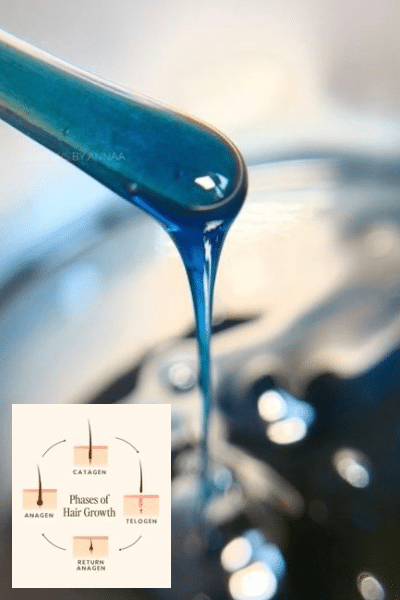
Understanding the Three Phases of Hair Growth
Every hair on your body moves through three primary stages of growth.
These stages repeat continuously throughout your life.
Understanding them makes it much easier to see why I recommend waxing every 4 to 6 weeks for most guests.
Phase One: Anagen (The Growing Phase)
This is the phase every esthetician hopes to catch.
During Anagen, the hair is actively growing from the follicle and remains firmly attached to its blood supply.
This is the healthiest and strongest stage of the hair cycle.
Because the hair is fully anchored inside the follicle, removing it during this phase often produces the best long-term results.
Over time, repeatedly removing hair during Anagen may contribute to finer, softer regrowth for many people.
This doesn’t happen overnight, but consistency makes a noticeable difference.
During Anagen:
✔ Hair is actively growing.
✔ Hair contains the most pigment.
✔ The follicle is strongest.
✔ Wax removes the hair completely from the root.
✔ Long-term consistency often produces finer regrowth.
Phase Two: Catagen (The Transition Phase)
Catagen is much shorter.
Think of it as the follicle preparing for a break.
Hair growth slows dramatically as the follicle begins separating from its blood supply.
Eventually, the follicle starts shrinking.
Although the hair is still present, it isn’t growing very much anymore.
This phase only lasts a couple of weeks.
Phase Three: Telogen (The Resting Phase)
During Telogen, the hair simply rests inside the follicle.
Nothing exciting is happening.
Eventually, that resting hair sheds naturally, allowing a brand-new Anagen hair to begin growing underneath it.
This is why new hairs seem to “appear” after waxing.
They aren’t growing overnight.
They’re simply entering the visible part of their natural cycle.
The Hair Growth Cycle
HAIR GROWTH CYCLE
🌱 ANAGEN
Active Growing Phase
│
▼
🍃 CATAGEN
Transition Phase
│
▼
🌙 TELOGEN
Resting Phase
│
▼
Hair Naturally Sheds
│
▼
New Hair Begins Growing
│
▼
Cycle Repeats Again
Why Your First Wax Doesn’t Remove Every Hair
This is one of the biggest reasons people become frustrated after their first waxing appointment.
A guest may notice a few hairs appearing a week or two later and wonder,
“Did my wax not work?”
Actually, it probably worked exactly as intended.
Remember:
Only hairs that have grown above the surface can be removed.
If a hair is still beneath the skin during your appointment, there is nothing for the wax to grab.
That hair will continue its natural cycle and eventually emerge days or weeks later.
This is completely normal.
It’s also why regular appointments matter so much.
Instead of looking at each wax as a separate event, think of waxing as training your hair to grow in a more predictable pattern over time.
The Waxing Synchronization Effect™
This is something I explain to guests almost every day, yet very few articles talk about it.
I call it the The Waxing Synchronization Effect.
Although every follicle grows independently, regular waxing gradually encourages more hairs to be removed around the same point in their growth cycle.
Over several appointments, many guests notice that their hair begins returning more evenly instead of in patches.
The result isn’t that every hair suddenly grows at exactly the same speed, that’s not how biology works. Instead, consistent waxing helps you catch more hairs during similar stages of growth over time, creating the appearance of a more synchronized cycle and longer-lasting smoothness.
That’s one reason guests often say:
“My third or fourth wax was so much better than my first.”
They’re right.
By staying close to a 4-6 week schedule, many people begin seeing:
- smoother skin for longer
- finer-feeling regrowth
- fewer stray hairs between appointments
- more even regrowth
- easier maintenance
The Waxing Synchronization Effect
FIRST APPOINTMENT
|||| ||||| || |||||| |||| |||||||
Hair is growing in many different stages.
SECOND APPOINTMENT
||||||| ||||| ||||| ||||||
More hairs are removed as they become available.
THIRD & FOURTH APPOINTMENTS
||||||||||||||||||||
Hair tends to return more evenly,
creating longer-lasting smoothness
for many guests who stay consistent.
Mekah’s Pro Tip
One of the biggest differences I notice after nearly two decades of waxing is that guests who stay on a regular schedule almost always enjoy better results than those who wax only for vacations or special occasions. Consistency gives us the opportunity to work with your hair’s natural growth cycle instead of constantly starting over.
Why Consistent Waxing Works Better Than Occasional Waxing
If there’s one piece of advice I could give every guest, it’s this:
Treat waxing like a skincare routine, not a special occasion.
Many people schedule a wax only before a vacation, wedding, holiday, or beach trip. While that’s perfectly fine, guests who maintain a consistent waxing schedule almost always experience better long-term results.
That’s because every appointment builds on the progress of the previous one.
Instead of constantly starting over, we’re working with your hair’s natural growth cycle to create smoother, longer-lasting results.
Why I Recommend Waxing Every 4-6 Weeks
One of the questions I hear most often is:
“How often should I get waxed?”
For most guests, I recommend scheduling appointments every 4 to 6 weeks.
This isn’t an arbitrary number, it’s based on how body hair typically grows. During that time, enough new hairs usually emerge from the skin to make another waxing appointment worthwhile, while still being short enough to keep your skin looking consistently smooth.
That said, every guest is different.
Several factors influence how quickly your hair grows, including:
- Genetics
- Hormones
- Age
- Medications
- Pregnancy
- Menopause
- Stress
- Overall health
- The area being waxed
For example, facial hair often grows more quickly than leg hair, while underarms and Brazilian waxing tend to fall somewhere in between.
That’s why I customize recommendations for each guest instead of following a one-size-fits-all schedule.
General Waxing Schedule by Body Area
|
Body Area |
Typical Schedule |
|
Eyebrows |
Every 3-4 weeks |
|
Lip & Chin |
Every 3-5 weeks |
|
Underarms |
Every 4 weeks |
|
Bikini |
Every 4-6 weeks |
|
Brazilian |
Every 4-6 weeks |
|
Manzilian |
Every 4-6 weeks |
|
Legs |
Every 4-6 weeks |
|
Arms |
Every 4-6 weeks |
|
Back & Chest |
Every 4-6 weeks |
Remember: These are general guidelines. Your ideal schedule may vary depending on your individual hair growth cycle.
What Happens When You Stay Consistent?
Many guests are surprised by how much their waxing experience changes after several appointments.
The first wax is usually the biggest adjustment because your hair has likely been growing on multiple cycles for months or even years.
As those cycles begin to align more closely over time, the experience often becomes easier.
Here’s what many guests notice.
Appointment Timeline: What to Expect
First Appointment
Your first wax removes all of the visible hair that’s long enough for the wax to grip.
Since many hairs are still below the skin’s surface, you may notice new hairs appearing over the next couple of weeks.
This is completely normal.
Remember—they weren’t missed.
They simply hadn’t emerged yet.
Second Appointment
More hairs have now entered the active growth phase.
During this visit, I’m able to remove many of those newly emerged hairs.
Guests often notice:
- Less patchiness
- Slower regrowth
- Softer-feeling skin
- Hair growing back more evenly
Third and Fourth Appointments
This is where many guests begin noticing a real difference.
Because you’ve stayed on schedule, we’re catching more hairs at similar stages of growth.
The result is often:
- Longer-lasting smoothness
- Less noticeable regrowth
- Fewer random hairs appearing between appointments
- Easier maintenance
Many guests also comment that their appointments seem quicker because there’s less dense regrowth.
Ongoing Maintenance
Once you’ve established a routine, waxing becomes much easier to maintain.
Instead of feeling like you’re “starting over” every appointment, you’re simply maintaining your results.
Your Waxing Journey
FIRST WAX
⭐⭐
✓ Removes visible hair
✓ Fresh smooth skin
✓ Some new hairs appear later
↓
SECOND WAX
⭐⭐⭐
✓ More even regrowth
✓ Less patchiness
✓ Hair feels softer
↓
THIRD & FOURTH WAX
⭐⭐⭐⭐
✓ Hair becomes more synchronized
✓ Smoother skin lasts longer
✓ Easier maintenance
↓
REGULAR MAINTENANCE
⭐⭐⭐⭐⭐
✓ Consistent smoothness
✓ Less noticeable regrowth
✓ Appointments become routine
10 Benefits of Staying on a Regular Waxing Schedule
1. Longer-Lasting Smooth Skin
This is the benefit most guests notice first.
Since waxing removes hair from the root rather than cutting it at the skin’s surface, it naturally takes longer for hair to become visible again.
When you stay on schedule, many guests find they enjoy smoother skin between appointments.
2. Softer Regrowth
One of the biggest waxing myths is that hair grows back thicker.
In reality, waxing removes the entire hair from the follicle.
As new hair grows, the tip is naturally tapered instead of blunt like it is after shaving.
That often makes regrowth feel softer.
3. More Even Hair Growth
Instead of random hairs appearing every few days, consistent waxing helps create more uniform regrowth over time.
This is one of the biggest advantages of the Hair Growth Synchronization Effect.
4. Less Daily Maintenance
Imagine not thinking about shaving every morning.
Many guests appreciate simply enjoying smooth skin without constantly checking for stubble.
5. Better Makeup Application
For guests who receive facial waxing, removing peach fuzz can create a smoother canvas for foundation and other makeup products.
Products often apply more evenly.
6. Cleaner Skin Surface
Waxing also removes dead skin cells during the process.
While waxing isn’t an exfoliating treatment, this gentle removal of surface skin cells often leaves the skin feeling exceptionally smooth.
Regular exfoliation between appointments helps maintain those results.
7. Fewer Ingrown Hairs
Ingrown hairs can happen with shaving or waxing, especially for people with curly or coarse hair.
However, many guests experience fewer ingrown hairs when they:
- Stay on a consistent schedule
- Exfoliate regularly
- Moisturize daily
- Avoid shaving between appointments
We’ll cover this in more detail later in the article.
8. Faster Appointments
When hair growth is more consistent, appointments often become more efficient.
Instead of removing heavy, uneven regrowth, I’m maintaining an established waxing routine.
9. More Comfortable Waxing Experience
Many long-term guests tell me their appointments become more comfortable over time.
While everyone’s pain tolerance is different, finer, more even regrowth can make the experience feel easier for many people.
10. Increased Confidence
This is probably my favorite benefit.
Whether you’re preparing for a vacation, wearing shorts, heading to the gym, or simply enjoying your own skin, feeling smooth can help you feel more confident.
Confidence looks different for everyone, but I love seeing guests leave feeling refreshed and comfortable.
Did You Know?
Your body has millions of hair follicles, and each one operates independently.
That’s why you can never remove every hair during your first waxing appointment.
Consistency, not perfection, is what produces the best long-term results.
Mekah’s Pro Tip
After nearly twenty years of waxing guests, I’ve learned that the people who see the best results aren’t necessarily the ones with the least hair… they’re the ones who stay consistent. A regular waxing schedule allows me to work with your natural hair growth cycle, helping many guests enjoy smoother skin, more even regrowth, and appointments that become easier over time.
Waxing Myths, Shaving Between Appointments, Ingrown Hairs & Expert Aftercare
By now, you’ve learned how the hair growth cycle works and why staying on a regular waxing schedule can lead to smoother, longer-lasting results.
Even so, there are still plenty of misconceptions about waxing. Over the past 19 years, I’ve heard just about every myth imaginable, from “waxing makes your hair grow back thicker” to “you should wait until your hair is really long before waxing.”
Let’s separate fact from fiction so you know exactly what to expect from your waxing journey.
Waxing Myth vs. Reality
Myth #1: Waxing Makes Hair Grow Back Thicker
False.
This is probably the biggest myth I hear.
Waxing removes the entire hair from the follicle. When a new hair grows, it naturally has a tapered end rather than the blunt edge left behind by shaving.
That tapered tip often makes the regrowth feel softer and appear finer.
While waxing doesn’t permanently stop hair growth, many long-term guests notice that their hair becomes less coarse and less noticeable over time. Individual results vary, but this is one of the reasons so many people choose waxing over shaving.
Myth #2: You Should Wait Until Your Hair Is Really Long
False.
Some guests think they need to “grow it out” for months before waxing.
Thankfully, that’s not necessary.
For most body waxing services, I recommend hair that is approximately ¼ inch long, or about the length of a grain of rice. That’s usually enough for the wax to grip effectively without making the appointment more uncomfortable than necessary.
Waiting too long can actually make waxing more uncomfortable because there’s simply more hair to remove.
If you’re unsure whether your hair is long enough, I’d much rather you ask than wait unnecessarily.
Myth #3: Waxing Removes Every Hair Every Time
Not exactly.
Remember the hair growth cycle.
If a hair hasn’t emerged from the skin yet, it can’t be waxed.
That’s why it’s perfectly normal to notice a few new hairs appearing after your appointment. Those hairs weren’t missed—they simply weren’t ready.
This is one of the biggest reasons consistency produces better results than occasional waxing.
Myth #4: Waxing Is Always Extremely Painful
Everyone experiences waxing differently.
Your first appointment is often the most noticeable because your hair has likely been growing on different cycles.
As your appointments become more consistent and your regrowth becomes more even, many guests tell me their waxing experience feels easier.
Several things can also influence your comfort level, including:
- Your stress level
- Time of your menstrual cycle
- Caffeine intake
- Sleep
- Hydration
- Hair length
- How consistently you wax
While waxing is never completely sensation-free, it doesn’t have to be intimidating.
Myth #5: You Can’t Wax Sensitive Skin
Sensitive skin doesn’t automatically mean you can’t enjoy waxing.
It simply means your treatment should be customized.
Over nearly two decades, I’ve worked with guests who have all kinds of skin types. A professional consultation, proper skin preparation, and selecting the appropriate waxing products and techniques for each area can make a significant difference in your overall experience.
What Happens If You Shave Between Waxing Appointments?
This is another question I hear almost daily.
The short answer?
Shaving isn’t dangerous—but it does interrupt the progress you’ve made with regular waxing.
Remember the Hair Growth Synchronization Effect we talked about earlier.
When you wax consistently, you’re gradually removing more hairs around similar points in their growth cycle.
Shaving changes that.
Instead of removing the hair from the root, shaving simply cuts it off at the skin’s surface.
Each shaved hair continues its own individual growth cycle.
Over time, this creates multiple lengths of hair again, making it more difficult to achieve the smoother, more synchronized regrowth that many guests enjoy with regular waxing.
Think of it like resetting the clock.
One shave won’t ruin everything, but frequent shaving between appointments often means we’re starting over instead of building on previous progress.
Waxing vs. Shaving
WAXING
Removes hair from the root
│
▼
Slower visible regrowth
│
▼
More synchronized hair growth
│
▼
Longer-lasting smoothness
—————————-
SHAVING
Cuts hair at skin level
│
▼
Hair becomes visible sooner
│
▼
Growth cycles become uneven
│
▼
More frequent maintenance
Why Ingrown Hairs Happen
Let’s talk about one of the biggest frustrations in hair removal.
An ingrown hair develops when a hair curls or grows back into the skin instead of growing outward.
This can happen whether you shave or wax, although certain factors increase the likelihood.
Common causes include:
- Curly or coarse hair
- Dead skin buildup
- Tight clothing
- Friction
- Picking at the skin
- Inconsistent exfoliation
It’s important to understand that waxing itself isn’t necessarily the cause.
Rather, the way the hair grows back—and how well the skin is cared for afterward—plays a major role.
How to Help Prevent Ingrown Hairs
While no treatment can guarantee you’ll never experience an ingrown hair, there are several habits that can help reduce the likelihood.
1. Exfoliate Regularly
Gentle exfoliation helps remove dead skin cells that can trap new hairs beneath the surface.
I usually recommend beginning exfoliation 48 hours after your waxing appointment, unless I advise otherwise based on your skin.
Whether you prefer a gentle scrub, exfoliating glove, or a chemical exfoliant designed for post-wax care, consistency is key.
The goal isn’t to scrub aggressively—it’s to keep the skin surface clear.
2. Moisturize Every Day
Healthy skin is flexible skin.
Daily moisturizing helps support your skin barrier and may allow new hairs to grow through the surface more easily.
Look for lightweight, fragrance-free moisturizers if you’re prone to sensitivity.
3. Avoid Tight Clothing Immediately After Waxing
Freshly waxed follicles are temporarily open.
Tight leggings, jeans, athletic wear, or restrictive underwear can create friction that may irritate freshly waxed skin.
Whenever possible, choose loose, breathable clothing for the rest of the day.
4. Don’t Pick at Ingrown Hairs
I know it’s tempting.
Unfortunately, picking often causes more irritation than the ingrown hair itself.
It can also increase the risk of discoloration, prolonged healing, or infection.
If you’re concerned about recurring ingrown hairs, let me know during your appointment so we can discuss the best approach for your skin.
Aftercare Matters Just as Much as the Wax
A great wax doesn’t end when you leave the spa.
The next 24 to 48 hours are just as important.
Your skin has just undergone a form of controlled exfoliation, so giving it a little extra care helps it recover beautifully.
The First 24 Hours
For the best results, I generally recommend avoiding:
- Hot tubs
- Saunas
- Steam rooms
- Very hot showers
- Swimming pools
- Heavy exercise that causes excessive sweating
- Direct sun exposure
- Self-tanners
- Fragranced body products on freshly waxed areas
Giving your skin a chance to calm down helps minimize irritation and supports a comfortable recovery.
After 48 Hours
Once your skin has settled, it’s a great time to return to your regular skincare routine.
This includes:
- Gentle exfoliation
- Daily moisturizing
- Sunscreen on exposed areas
- Staying hydrated
- Maintaining your waxing schedule
Simple habits often produce the biggest improvements over time.
Mekah’s Pro Tip
One thing I’ve learned after 19 years is that the wax itself is only part of the equation. Guests who follow good aftercare and stay on a consistent schedule often enjoy smoother skin, fewer ingrown hairs, and appointments that become easier over time. I always tell my guests that healthy skin and consistent maintenance go hand in hand.
Did You Know?
Hair grows, but skin changes too.
Seasonal weather, hormones, medications, stress, pregnancy, menopause, and even changes in your skincare routine can all influence how your skin responds to waxing.
That’s one reason I check in with my guests at every appointment. Your waxing experience should evolve with your skin’s needs.
Your Waxing Success Checklist
✓ Stay on a consistent 4-6 week schedule (or the schedule we determine is best for you)
✓ Avoid shaving between appointments whenever possible
✓ Exfoliate regularly after the initial healing period
✓ Moisturize daily
✓ Wear loose clothing after waxing
✓ Follow your personalized aftercare instructions
✓ Communicate any skin changes or medications before your appointment
✓ Trust the process! Consistency is what produces long-term results
Frequently Asked Questions, Professional Insights, and Your Next Steps
By now, you understand why the hair growth cycle plays such an important role in your waxing results.
Whether you’re new to waxing or have been waxing for years, one thing remains true:
Consistency almost always produces better results than occasional appointments.
As an esthetician who’s been waxing for almost two decades, I’ve watched thousands of guests gain confidence as they transitioned from shaving to a regular waxing routine. The improvements don’t happen overnight, but with patience and consistency, many guests enjoy smoother skin, more even regrowth, and appointments that become easier over time.
Before we wrap up, let’s answer some of the questions I’m asked most often.
Frequently Asked Questions
➡️ How often should I get waxed?
For most guests, I recommend scheduling appointments every 4 to 6 weeks, although your ideal schedule depends on your individual hair growth cycle, hormones, genetics, and the area being waxed.
Facial waxing may be needed a little sooner, while areas like the legs may comfortably stay closer to six weeks.
➡️ How long should my hair be before waxing?
For most waxing services, your hair should be approximately ¼ inch long, or about the length of a grain of rice.
This gives the wax enough hair to grip while keeping your appointment as comfortable as possible.
If you’ve recently shaved and aren’t sure whether your hair is ready, feel free to ask before scheduling.
➡️ Why do I still see hair after my first wax?
This is completely normal.
Remember, every hair grows on its own schedule.
During your appointment, I can only remove hairs that are above the skin and long enough for the wax to grip.
Other hairs may still be below the surface and will emerge naturally over the following days or weeks.
That’s one reason consistent waxing produces better long-term results.
➡️ Does waxing make hair grow back thinner?
Everyone is different.
Waxing isn’t considered a permanent hair removal method, but many guests notice that with consistent appointments, regrowth often feels softer, appears finer, and becomes less dense over time.
This is especially common when guests avoid shaving between appointments and stay on a regular schedule.
➡️ Is waxing better than shaving?
Both methods remove hair, but they work very differently.
Shaving cuts hair at the skin’s surface.
Waxing removes the hair from the root.
Because of that, waxing typically provides longer-lasting smoothness while reducing the need for frequent maintenance.
Many guests also prefer the softer feel of waxed regrowth compared to shaved stubble.
➡️ Can I wax if I have sensitive skin?
In many cases, yes.
Sensitive skin doesn’t automatically prevent someone from waxing.
That’s why every appointment begins with a consultation.
We’ll discuss your skin, medications, allergies, and concerns so I can recommend the most appropriate approach for your skin type.
➡️ Should I exfoliate before my appointment?
Yes, but gently.
Regular exfoliation helps remove dead skin cells and may reduce the likelihood of ingrown hairs.
However, avoid aggressive exfoliation immediately before your appointment, as freshly exfoliated skin can be more sensitive.
➡️ Why do you recommend waiting 48 hours before exfoliating again?
Freshly waxed skin needs time to recover.
Waiting about two days allows your skin to calm before introducing exfoliation again.
From there, gentle, regular exfoliation becomes an important part of maintaining healthy skin between appointments.
➡️ Why I Use Both Strip Wax and Hard Wax
One question guests often ask is: “Which wax is better?”
The truth is, there isn’t one “best” wax for every service.
After nearly two decades of waxing, I’ve learned that choosing the right wax depends on several factors, including:
- The area being waxed
- Hair texture
- Hair density
- Skin sensitivity
- The guest’s comfort
- The desired result
That’s why I use both strip wax and hard wax.
Each has strengths, and each serves a purpose.
Rather than choosing one over the other, I select the product and technique that I believe will provide the best experience for that specific area and guest.
If you’d like to learn more about the differences, be su
The Bigger Picture: Waxing Is Part of Healthy Skin Care
One thing I hope you take away from this guide is that waxing isn’t simply about removing unwanted hair.
It’s also about developing a routine that supports healthy-looking skin.
When you combine:
- Consistent appointments
- Proper aftercare
- Gentle exfoliation
- Daily moisturizing
- Professional techniques
you’re giving your skin the best opportunity to stay smooth, comfortable, and healthy.
For many guests, waxing becomes just another part of their self-care routine—just like facials, skincare, or regular haircuts.
Mekah’s Final Thoughts
When I first started waxing guests, I quickly realized that education was just as important as technique.
The more guests understood about their hair growth cycle, the more confident they felt about the process and the more realistic their expectations became.
Nineteen years later, that hasn’t changed.
I genuinely enjoy helping guests understand why their hair grows the way it does and how consistent waxing can make a difference over time.
Whether you’re scheduling your very first eyebrow wax, preparing for your first Brazilian or Manzilian, or maintaining a full-body waxing routine, my goal is always the same:
To help you feel comfortable, informed, and confident in your own skin.
Ready to Start Your Waxing Journey?
Whether you’re looking for facial waxing, body waxing, a Brazilian, a Manzilian, or you’re simply curious about creating a personalized waxing schedule, I’d love the opportunity to help.
At Mekah’s Body Shop, every guest receives individualized care based on their skin type, hair growth, comfort level, and personal goals.
Together, we’ll develop a waxing routine that works with your body—not against it.
Ready to enjoy smoother skin?
Book your appointment today, and let’s create a waxing schedule that helps you achieve long-lasting results while keeping your skin looking and feeling its best.
REFERENCES ARTICLES:
- Everything You Need to Know About Female Waxing
- Manzilian & Boyzilian: A Guide for Men’s Grooming, Comfort, and Confidence
- Your First Wax: Essential Pre-Wax Prep Tips
- The Difference Between Hard Wax and Strip Wax
- Brazilian Wax Service Page
- Manzilian Wax Service Page
- Facial Waxing Services
- Body Waxing Services
- Waxing Pricing Page
- Book Now